
Here's a comprehensive Management Insights Mind Map designed to capture key principles, practices, and wisdom for effective leadership and business management. It draws from classic frameworks (like Henri Fayol's 14 principles and the POLC model), modern leadership insights, and practical applications in strategy, teams, and projects.
Central Idea: Management Insights
(The art and science of achieving goals through people and resources via planning, organizing, leading, and controlling—while adapting to change, fostering innovation, and driving sustainable results.)
Main Branches & Key Sub-Insights
1. Core Functions (POLC Framework)
- Planning: Set clear vision, goals, and roadmaps. Anticipate risks and opportunities. Use strategic mind mapping for long-term alignment.
- Organizing: Structure resources, roles, and processes. Build efficient teams and hierarchies (division of work, authority with responsibility).
- Leading: Inspire, motivate, and empower people. Focus on communication, emotional intelligence, and distributed leadership.
- Controlling: Monitor performance, measure KPIs, and make data-driven adjustments. Emphasize feedback loops and continuous improvement.
2. Timeless Principles (Inspired by Fayol & Others)
- Division of Work & Specialization
- Authority & Responsibility (they must balance)
- Discipline & Unity of Command/Direction
- Equity, Initiative, and Esprit de Corps (team spirit)
- Scalar Chain (clear communication lines) with flexibility for modern flat organizations
- Remuneration, Stability, and Order
3. Leadership & People Management
- Leadership vs. Management: Leaders create vision and change; managers execute and optimize.
- Key skills: Emotional intelligence, decision-making under uncertainty, delegation, and coaching.
- Team dynamics: Foster collaboration, psychological safety, and diversity of thought.
- Motivation insights: Purpose-driven work, recognition, and growth opportunities often outperform pure incentives.
- Common pitfalls: Micromanagement, ignoring negative emotions, or failing to adapt styles to situations.
4. Strategy & Decision-Making
- Develop a clear business roadmap with vision, milestones, and adaptability.
- Use tools like SWOT, Blue Ocean strategy, or mind maps for brainstorming and scenario planning.
- Insights: Connect leadership acts directly to performance outcomes. Eliminate low-value activities; raise high-impact ones.
- Data-driven decisions balanced with intuition and experimentation.
5. Project & Operations Management
- Break down goals into tasks, timelines, resources, and dependencies.
- Visualize with Gantt charts or mind maps for priorities and risks.
- Agile principles: Iterative progress, feedback, and flexibility over rigid plans.
- Efficiency techniques: Lean, Six Sigma, or scientific management elements (e.g., time/motion study adapted ethically).
6. Innovation, Change & Modern Insights
- Embrace uncertainty: Build resilient organizations through continuous learning and adaptation.
- Innovation pipeline: Empathize → Define → Ideate → Prototype → Test (Design Thinking).
- Sustainability & ethics: Fulfill social responsibility; act as stewards and meaning-makers.
- Technology integration: Automation, analytics, and AI for optimization and better insights.
- Time & productivity: Prioritize ruthlessly; use mind maps to reduce meeting waste and clarify thinking.
7. Measurement & Continuous Improvement
- Track metrics that matter (not just vanity KPIs).
- Review & optimize: Regular retrospectives, feedback, and scaling successful practices.
- Personal development: Managers as lifelong learners—reflect on patterns, biases, and growth areas.
Why Use a Mind Map for Management Insights?
Mind mapping helps leaders see connections, spot patterns, generate ideas quickly, and communicate complex strategies simply. It reduces overwhelm, boosts creativity, and turns abstract principles into actionable plans.

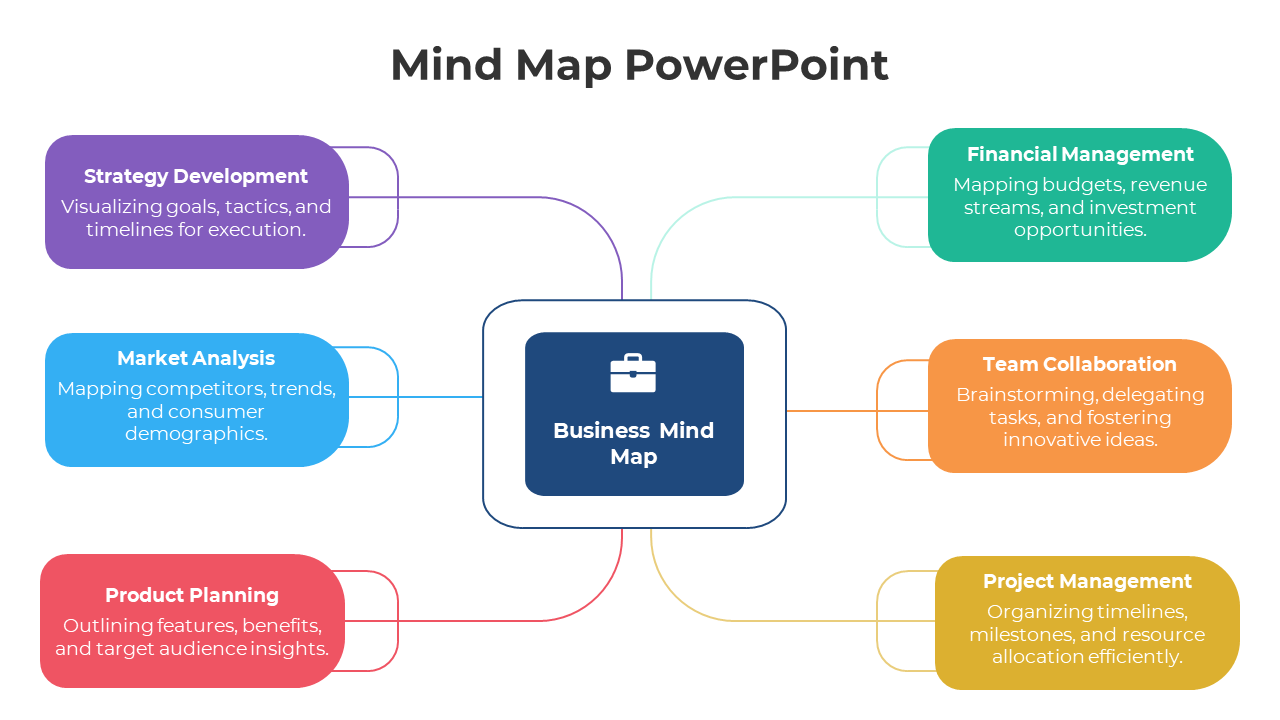
This structure serves as a ready-to-use framework. You can expand any branch with specific examples from your context (e.g., industry challenges in Phnom Penh or Cambodia's growing economy).
Practical Tips to Apply This:
- Start with the central idea and radiate outward in sessions.
- Color-code branches (e.g., blue for planning, green for leadership).
- Add icons, images, or links for deeper dives.
- Review and update quarterly for relevance.
If you'd like me to expand a specific branch (e.g., leadership skills or project management), tailor it to a particular area like startup management or team motivation, or generate a custom visual representation, just let me know! Tools like MindMeister, Canva, or Figma make it easy to digitize this.